

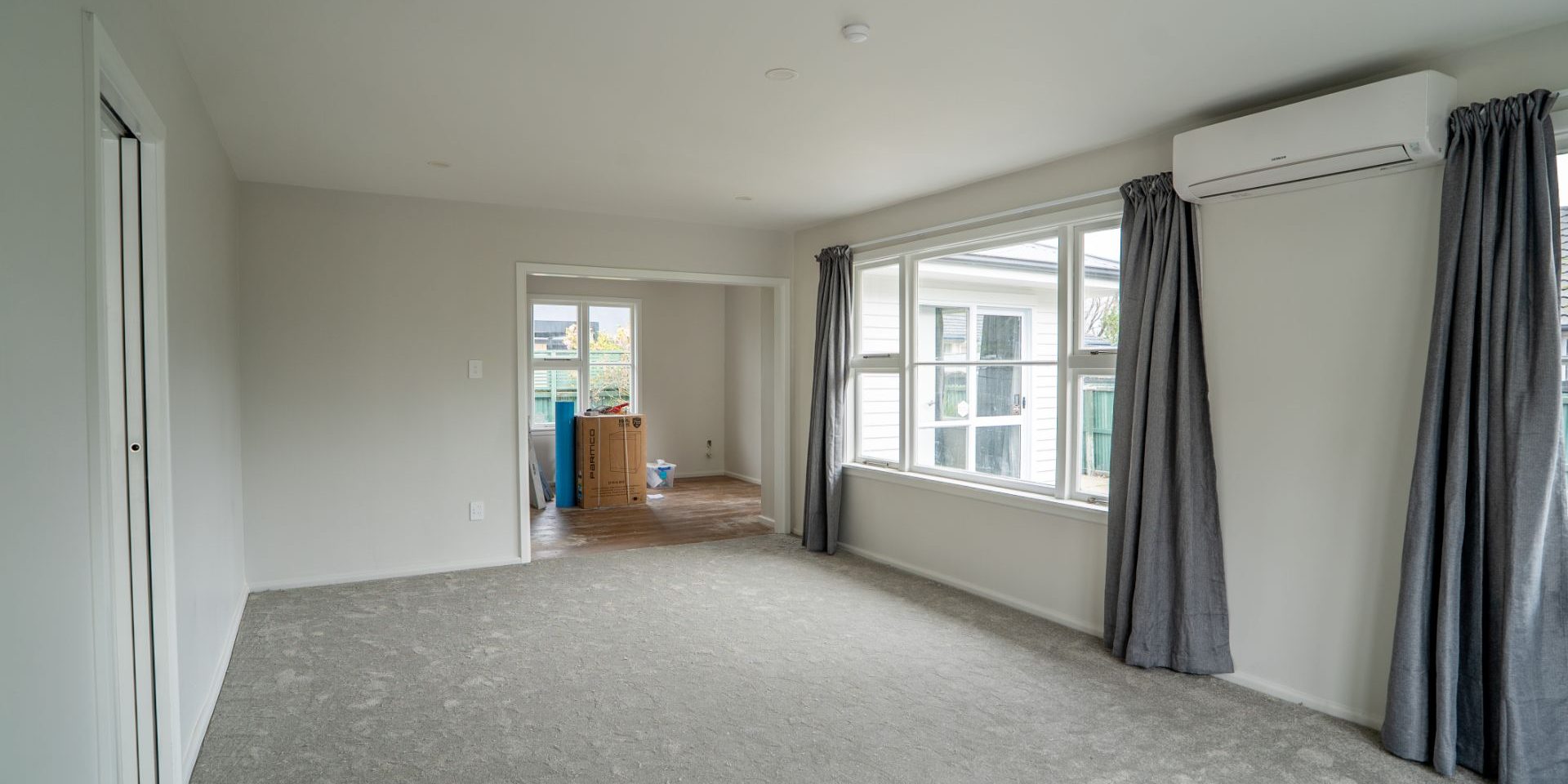
Drop a marble in the lounge and it rolls to one corner. The bedroom door won’t close unless you lift it. There’s a crack in the hallway that comes back every time you fill it.
In Christchurch, these are often signs of foundation damage from the earthquakes. Some homes were never properly fixed. Others were repaired, only for the floors to drop again. And plenty of owners have simply got used to living with a lean.
But when it’s time to sell, uneven floors suddenly matter a lot. Here’s what you need to know, in plain English.
Signs your home might have foundation problems
You don’t need to be a builder to spot them. Most people notice things like:
- Floors that slope, so furniture rocks or things roll
- Doors and windows that stick, jam or swing on their own
- Cracks in walls and ceilings, especially from the corners of doors and windows
- Cracks in the concrete around the outside of the house, or cracked floor tiles
- Gaps between the skirting boards and the floor
- Cracked brick cladding or a damaged chimney
One of these on its own might be nothing. A few of them together, in a house that went through the 2010 and 2011 quakes, are worth taking seriously.
What is a floor level survey?
If you or a buyer want to know how bad the problem is, the usual first step is a floor level survey. A surveyor or engineer measures the height of the floor at lots of points around the house. That shows which parts have dropped and by how much.
An engineer then uses those results to decide whether the floor is fine as it is, needs to be re-levelled, or needs new foundations. It’s a useful report, but it costs money, and it can lead to more reports and quotes before you know the full picture.
“But it was already fixed…”
It’s a common story. Many Christchurch homes were re-levelled after the earthquakes, often by jacking up the floor and packing the piles. In some cases, the repairs haven’t held, or weren’t done quite right in the first place.
If your home was fixed but the floors still feel off, you’re not imagining it, and you’re not alone. It doesn’t stop you selling.
Why foundation problems put buyers off
Few things worry buyers more than foundations. Paint and carpet are easy to change. The ground the house sits on is not.
- Nobody knows the final cost. Fixing foundations can be a small job or a very big one, and buyers can’t tell which by looking. So they tend to assume the worst and lower their offer.
- The building report will find it. Almost every buyer gets a building inspection. Sloping floors and cracks go straight into the report.
- Banks and insurers get nervous. A bank may want an engineer’s report before lending. Some insurers won’t cover a home with known, unrepaired foundation damage, and without insurance, most buyers can’t get a mortgage.
- You have to tell buyers. If you know about the damage, it must be disclosed. Many buyers stop there.
- Sales fall over late. Even a keen buyer can get a big repair quote during the conditional period and pull out, or come back with a much lower price.
Your two main options
1. Fix it, then sell
You get the survey, the engineer’s report, the quotes, possibly a building consent, and then the work itself. If it all goes well, you can sell a sound home to buyers who need a mortgage.
The downside is that you pay for everything up front, it can take many months, and there’s no promise the sale price will cover what you spent. Our post Should I Repair My Earthquake-Damaged Home or Sell It As Is Where Is? goes into this in more detail.
2. Sell As Is Where Is to My New Start
We buy homes with sloping floors, cracked foundations and repairs that didn’t hold. We’ve bought more than 450 earthquake-damaged and run-down homes across Canterbury, and foundation work is a big part of what we do after we buy.
You don’t need a floor level survey or an engineer’s report before you call us. Kane or Ronan will visit, look over the home and work out what it needs, and we can give you a written, unconditional offer within 24 hours of the visit. With us there are:
- no repairs, surveys or consents to sort out first
- no agent fees or open homes
- no building report or finance conditions
- no renegotiating later, because the price we offer is the price you receive
And you choose the settlement date, so you have time to sort out your next move.
Which option is right for you?
If you have the time, money and energy for a big repair job, fixing it first may get you a higher sale price. If you’d rather have certainty and a clean exit, selling As Is Where Is takes the foundation problem off your plate completely.
Either way, it helps to know what your home is worth as it stands today. That’s what our free assessment gives you.
Let’s talk
If your Christchurch home has uneven floors, cracked foundations or a repair that didn’t last, call us any time on 0800 697 827, or book a free assessment online. No cost, no pressure, and we can provide a written, unconditional offer within 24 hours of our visit.